Friday, February 28, 2020

Dedicated Managed Server Hosting

Today, digital agencies are attempting to run their businesses much leaner. Designers and developers want the freedom to focus more on their core business. They want to create, not administer the infrastructure or manage the technology and data. That’s not what gives them passion and it’s not why they are in business. But hosting and infrastructure are what Liquid Web does best.

What is Managed Hosting?

Those in the digital space are familiar with Managed Hosting in one way or another.
This is a business model where a service provider leases hardware to a single customer. The service provider also provides management of the servers, software, and networks necessary for hosting for the customer.
If an issue arises, a managed hosting provider is there to help pinpoint the problem and rectify it.
Fully Managed Dedicated Server Hosting is an isolated hosting environment where the provider handles the setup, administration, management, and support of the server or platform application. The resources are specific to the user ensuring that your data alone is hosted in your environment without being affected by the issues that arise from sharing resources.

Shared Hosting

Shared hosting is the most popular example of multi-tenancy. This is where many sites or applications exist on the same server. Quite often, shared hosting divides the server resources among customers. This would include storage and bandwidth and in some cases RAM and CPU cores.
Think of shared hosting as a home with renters all sharing the same living space.

Managed Dedicated Server Hosting

Dedicated hosting would be an example of single-tenancy. With this type of environment, a single customer hosts their site(s) or application(s). With managed dedicated server environments, the server hardware and resources for that hardware belong to that single customer.
To continue with the above analogy, think of dedicated hosting as a home with one occupant. This avoids “noisy neighbors” encroaching on your space, disrupting your space and the space of those visiting your site.

Thursday, February 27, 2020

Managed Server Definition

A managed server is your own dedicated hosting service that also provides data storage services. In addition, managed servers have their own maintenance and backup systems. ... The one big advantage of managed servers is that they relieve the clients of having to maintain the servers themselves.

What is Managed Hosting?

Those in the digital space are familiar with Managed Hosting in one way or another.
This is a business model where a service provider leases hardware to a single customer. The service provider also provides management of the servers, software, and networks necessary for hosting for the customer.
If an issue arises, a managed hosting provider is there to help pinpoint the problem and rectify it.

What is Fully Managed Dedicated Server Hosting?

Fully Managed Dedicated Server Hosting is an isolated hosting environment where the provider handles the setup, administration, management, and support of the server or platform application. The resources are specific to the user ensuring that your data alone is hosted in your environment without being affected by the issues that arise from sharing resources.

Shared Hosting

Shared hosting is the most popular example of multi-tenancy. This is where many sites or applications exist on the same server. Quite often, shared hosting divides the server resources among customers. This would include storage and bandwidth and in some cases RAM and CPU cores.
Think of shared hosting as a home with renters all sharing the same living space.

Managed Dedicated Server Hosting

Dedicated hosting would be an example of single-tenancy. With this type of environment, a single customer hosts their site(s) or application(s). With managed dedicated server environments, the server hardware and resources for that hardware belong to that single customer.
To continue with the above analogy, think of dedicated hosting as a home with one occupant. This avoids “noisy neighbors” encroaching on your space, disrupting your space and the space of those visiting your site.
Monday, February 24, 2020

What is mean by wireless LAN?

A wireless local area network (WLAN) is a wireless distribution method for two or more devices that use high-frequency radio waves and often include an access point to the Internet. A WLAN allows users to move around the coverage area, often a home or small office, while maintaining a network connection.

WLAN is sometimes call a local area wireless network (LAWN).
In the early 1990s, WLANs were very expensive and were only used when wired connections were strategically impossible. By the late 1990s, most WLAN solutions and proprietary protocols were replaced by IEEE 802.11 standards in various versions (versions "a" through "n"). WLAN prices also began to decrease significantly.
WLAN should not be confused with the Wi-Fi Alliance's Wi-Fi trademark. Wi-Fi is not a technical term, but is described as a superset of the IEEE 802.11 standard and is sometimes used interchangeably with that standard. However, not every Wi-Fi device actually receives Wi-Fi Alliance certification, although Wi-Fi is used by more than 700 million people through about 750,000 Internet connection hot spots.
Every component that connects to a WLAN is considered a station and falls into one of two categories: access points (APs) and clients. APs transmit and receive radio frequency signals with devices able to receive transmitted signals; they normally function as routers. Clients may include a variety of devices such as desktop computers, workstations, laptop computers, IP phones and other cell phones and Smartphones. All stations able to communicate with each other are called basic service sets (BSSs), of which there are two types: independent and infrastructure. Independent BSSs (IBSS) exist when two clients communicate without using APs, but cannot connect to any other BSS. Such WLANs are called a peer-to-peer or an ad-hoc WLANs. The second BSS is called an infrastructure BSS. It may communicate with other stations but only in other BSSs and it must use APs.

Entry level Cyber Security Certifications

The best cyber security certification PATH for beginners

When we look at entry level cyber security certifications and which ones are a best fit on a certification path, there are a few factors and criteria that we want to consider.  The best cyber security certifications for beginners will require the equivalent of two years or less of experience, cost less than $400 and only take one test to achieve. They also will not mandate a specific training be completed beforehand.  Keep in mind that a number of exams require documented work experience in the cyber security field or a sponsorship from someone already in the field, so those would not qualify for entry level status either.  We also want to choose a path that minimizes time and effort since our goal is to get certified and get hired quickly.
With these factors in mind, here is my view of the best cyber security certification path for beginners who are looking to enter field:

Step 1: CompTIA Network+ and/or Security+

CompTIA’s Network+ and Security+ are the first steps on our path to cyber security because they are highly recognized, only take one exam to earn, and do not have a minimum requirement of experience to qualify to sit for the exams.
You are probably wondering why I list two certifications in our first step and why they are listed as an and/or.  Both the CompTIA Network+ and Security+ are listed because they have a great deal of overlap in content and preparing for one actually helps you prepare for both.  If you choose to take both, take the Network+ first.

The Network+ covers basic computer networking concepts, such as routers, switches and protocols, and now has a great deal of network security content as well, such as cyber attacks and systems hardening concepts.  The Security+ covers basic security concepts, such as cyber attacks and systems hardening, but also touches on network concepts such as routers and switches. See the point? It’s tough to talk about computer networks without also talking about security in our modern connected world, so there is now a good bit of overlap between the two exams.  In fact, 20% of the Network+ exam is devoted to security concepts.
So, what should you do?  If you already have strong networking knowledge and are pressed for time, you could just jump straight to the CompTIA Security+.  I’ve had several students do that. I believe Security+ is more respected than Network+ and it is a true security certification. If you earn the Security+ first, many employers will probably assume you have the networking concepts down too.
If you are new to the cyber security field completely, going for the Network+ first would be helpful and a good use of time.  It would also provide you with a solid foundation for your future certifications and your career. If you’re self studying and not enrolled in a training program, I think you definitely should go for the Network+ first just so you can build that foundation knowledge.

Thursday, February 20, 2020

information technology specialist salary

Information technology has revolutionized modern society. Databases, email, television, smartphones, smart houses, and virtually all of the conveniences of modern life depend on information technology. Nearly 4 million Americans were working in computer, or information technology, fields in 2016, according to the U.S. Bureau of Labor Statistics. Most of these jobs pay relatively well, many with benefits. IT professionals typically enjoy good job security as well. The BLS reports that those who worked in computer-related occupations earned a median salary of $82,860 in 2016.

Systems Analysts
Systems analysts work with businesses to improve their computer systems and networks. They bring a background in both business and information technology together to analyze and make recommendations for more efficient and effective operations. According to the BLS, systems analysts earned a median salary of $87,220 in 2016. Systems analyst job growth is projected to be around average at nine percent through 2026.

Database Administrators
Databases are an essential part of nearly all modern business operations, and database administrators are trained to maintain and modify electronic databases. Some database administrators create, modify and enter data into databases, others spend most of their time keeping databases up and running and responding to individual user queries or problems. The BLS reports that database administrators earned a median salary of $84,950 in 2016. Given the increasing demand for database professionals, the BLS is anticipating a strong 11 percent job growth for the occupation through 2026.

Network Administrators
Computer networks are the backbone of information technology. Network administrators are the professionals who install, maintain and support computer networks. Working as a network admin requires both basic programming skills and keeping up with the latest developments in networking hardware. Network administrators took home a median salary of $79,700 in 2016. Job prospects are average for network admins, with six percent job growth projected through 2026.

IT/Computer Support Specialists
IT support specialists, sometimes called tech support or user support specialists, help employees and/or clients who are having computer-related problems. Some IT support staff are hired by large enterprises to support employees; others are hired by companies to offer technical support to users of computers and other information technology-related devices. Tech support specialists earned a median salary of $52,160 in 2016. IT support staff positions are projected to increase by around 11 percent between 2016 and 2026.

Wednesday, February 19, 2020

How Much Does a Cyber Security Specialist Make?

Cyber security is a growing field. Our lives are more and more online, our money and reputations are digital. As information moves to the cloud, securing it becomes more of a challenge.

What does a Cyber Security Specialist Do?

Cyber security specialists monitor, test, and troubleshoot security systems. They need to know about security products and how to operate and install them. They are also expected to educate employees on proper security techniques and how to protect their data, and may establish security policies.

What kind of Pay will a Cyber Security Specialist Earn?

According to the Bureau of Labor Statistics (BLS), information security analysts have a median pay of $90,120 per year. Equally important, the BLS anticipates that computer security jobs will grow 18% during the period from 2014 to 2024, higher than the average for jobs in computing and much higher than the 7% projected average for all jobs.
Data breaches happen so often that it’s easy to gloss over the headlines, but the fallout is much harder for companies to ignore: hacks are not just embarrassing, but can lead to serious financial and reputational damage. So, it’s not surprising that there’s high demand for cyber security professionals, and that those who are up to the task are generously compensated. In fact, Computerworld reported that cyber security was the third most highly sought-after skill (right behind app development and tech support), according to managers who planned to expand their IT staff in 2017. In the same report, John Reed, the senior executive director of IT staffing firm Robert Half Technology, pointed out that many companies regularly have vacancies due to their inability to find suitable candidates.
Not only are cyber security skills in peak demand, but according to Computerworld’s 2017 IT Salary Survey Results, security is the third highest-paying IT specialty (after cloud computing and ERP) . But not all cyber-sec jobs pay the same. A handful of positions stand above the rest, at least in terms of compensation.


Tuesday, February 18, 2020

Network Security Technician Job Description

Computer Network Types

A computer network is a group of computers linked to each other that enables the computer to communicate with another computer and share their resources, data, and applications.
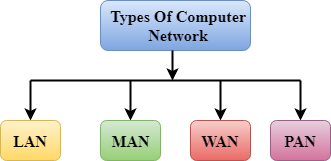
A computer network can be categorized by their size. A computer network is mainly of four types:
Computer Network Types
  • LAN(Local Area Network)
  • PAN(Personal Area Network)
  • MAN(Metropolitan Area Network)
  • WAN(Wide Area Network)

LAN(Local Area Network)

  • Local Area Network is a group of computers connected to each other in a small area such as building, office.
  • LAN is used for connecting two or more personal computers through a communication medium such as twisted pair, coaxial cable, etc.
  • It is less costly as it is built with inexpensive hardware such as hubs, network adapters, and ethernet cables.
  • The data is transferred at an extremely faster rate in Local Area Network.
  • Local Area Network provides higher security.
  • PAN(Personal Area Network)

    • Personal Area Network is a network arranged within an individual person, typically within a range of 10 meters.
    • Personal Area Network is used for connecting the computer devices of personal use is known as Personal Area Network.
    • Thomas Zimmerman was the first research scientist to bring the idea of the Personal Area Network.
    • Personal Area Network covers an area of 30 feet.
    • Personal computer devices that are used to develop the personal area network are the laptop, mobile phones, media player and play stations.
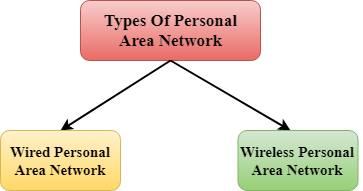
    • There are two types of Personal Area Network:
      Computer Network Types
      • Wired Personal Area Network
      • Wireless Personal Area Network
      Wireless Personal Area Network: Wireless Personal Area Network is developed by simply using wireless technologies such as WiFi, Bluetooth. It is a low range network.
      Wired Personal Area Network: Wired Personal Area Network is created by using the USB.

Is the CompTIA A+ Certification Worth It?

 comptia a+ salary What does value mean to you? For most, value means that you get more out than what you put in. Getting a good deal on a h...